





Production
Botanical name:
The illustrious Swedish scientist Carl Linnaeus (1707-1778) christened the plant “Asparagus officinalis L.”. The word “officinalis” indicates the plant has medicinal and therapeutic properties; the initial “L.” is in honour of Linnaeus, who was the first to classify this species.
Family:
Asparagus is a member of the Liliaceae family.
Growth cycle:
A perennial plant, which means it survives and produces for many years (8-15).
Edible part:
Spear
The spear:
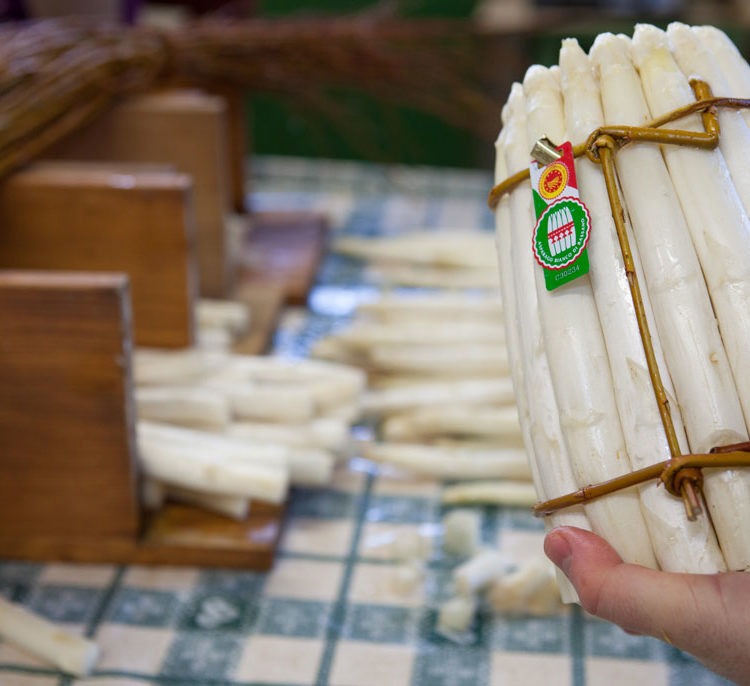
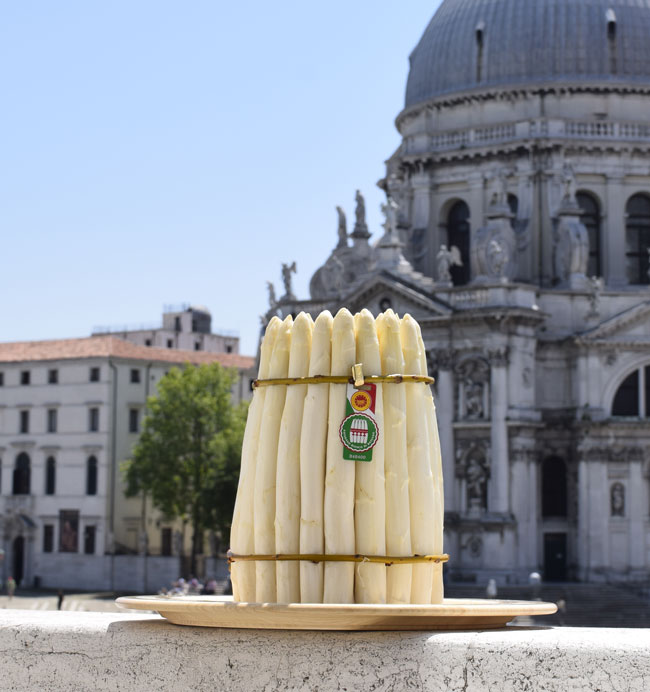
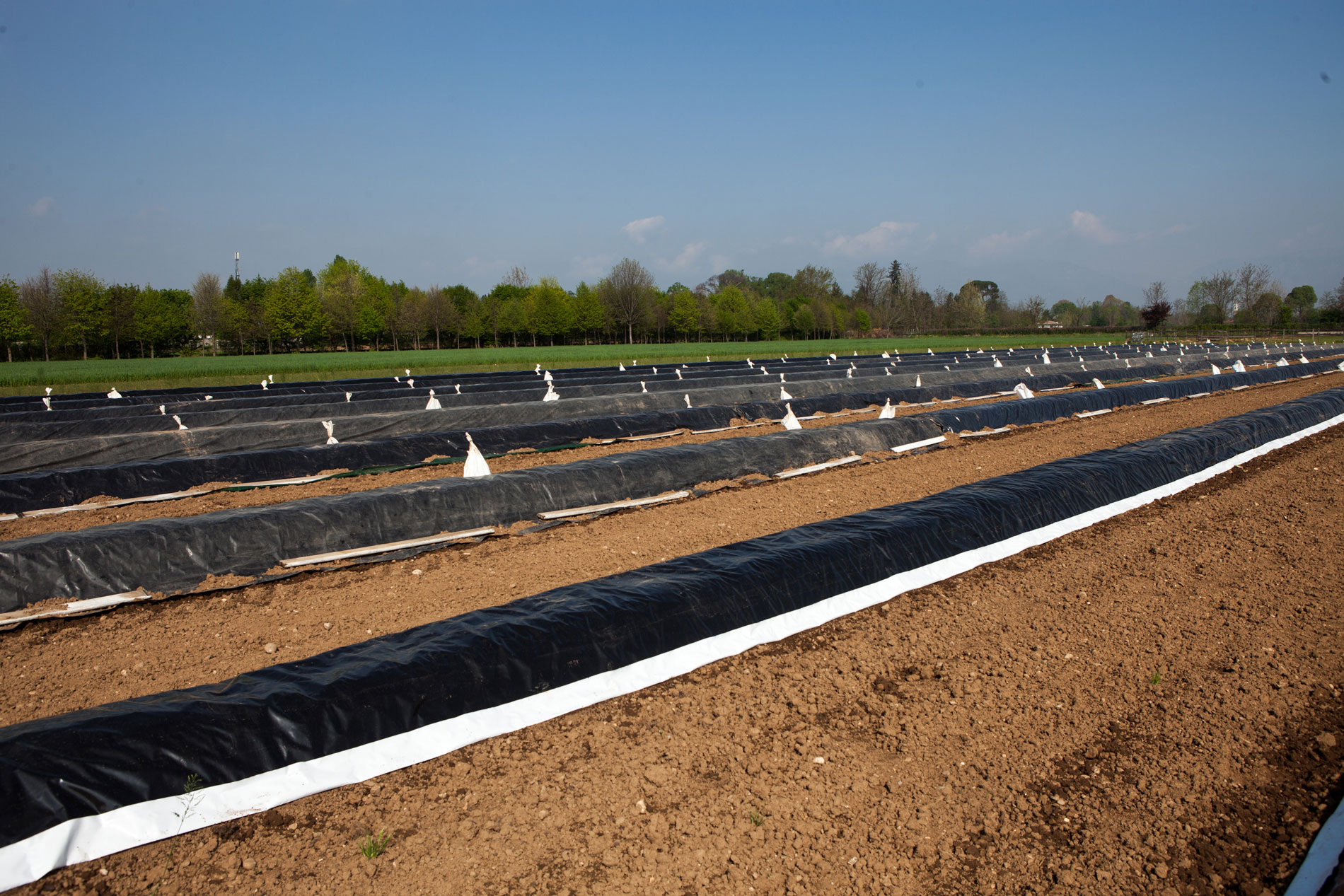
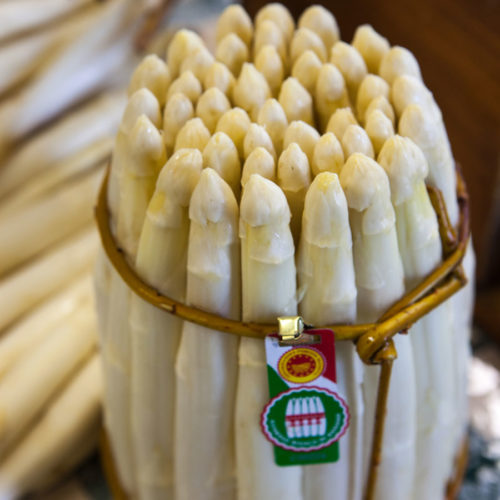
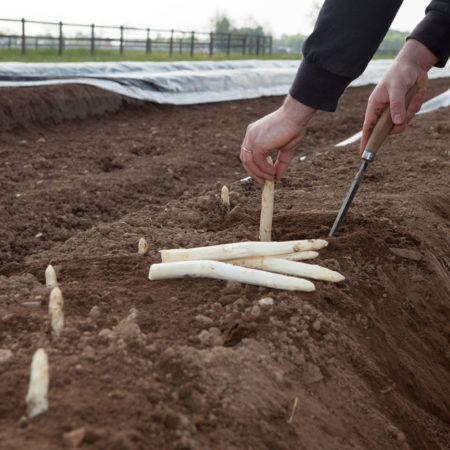
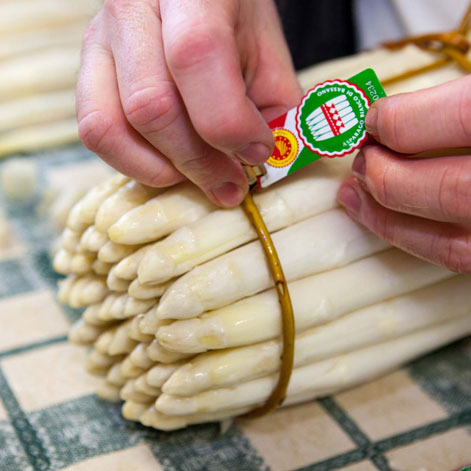
Botanically this is the plant’s stalk, with bracts or leaves. Picked before it emerges from the terrain, it is the exquisite edible part. Depending on cultivation methods, the spear can be white, rosy, violet or green. The Asparago Bianco di Bassano DOP spear grows and develops underground, shielded from sunlight, and thus remains white. This type of asparagus is not stringy in texture and has a characteristic sweet taste, both traits attributable to the particular composition of the alluvial soil where it grows. The climate in the Bassano district further enhances product quality.
Rootstock and roots
The rootstock is the horizontal underground stem, formed by shoots at the centre and large, smooth, fleshy, straw-yellow roots with short rootlets. The edible parts of this vegetable – known as the spears – sprout precisely from the rootstock and should be picked before they develop into stalks. The rootstock, roots and shoots make up the root flare.
Flowers, fruit, seeds
If the spears are not picked, they develop into green branching stalks with reduced, scaly leaves and fern-like fronds. Where branching occurs, small, bell-shaped, greenish-yellow single flowers form. The fruit is a berry the size of a pea, containing 5-6 black seeds. It appears first as green then turns scarlet.